The great chess of Timur · 14th century
Timur Chess
A giraffe sweeps half the board, a pawn is reborn three times, and a cornered king slips into the enemy citadel to save the game. Play the game of Timur’s court: against the computer, with a friend by link, or face to face.
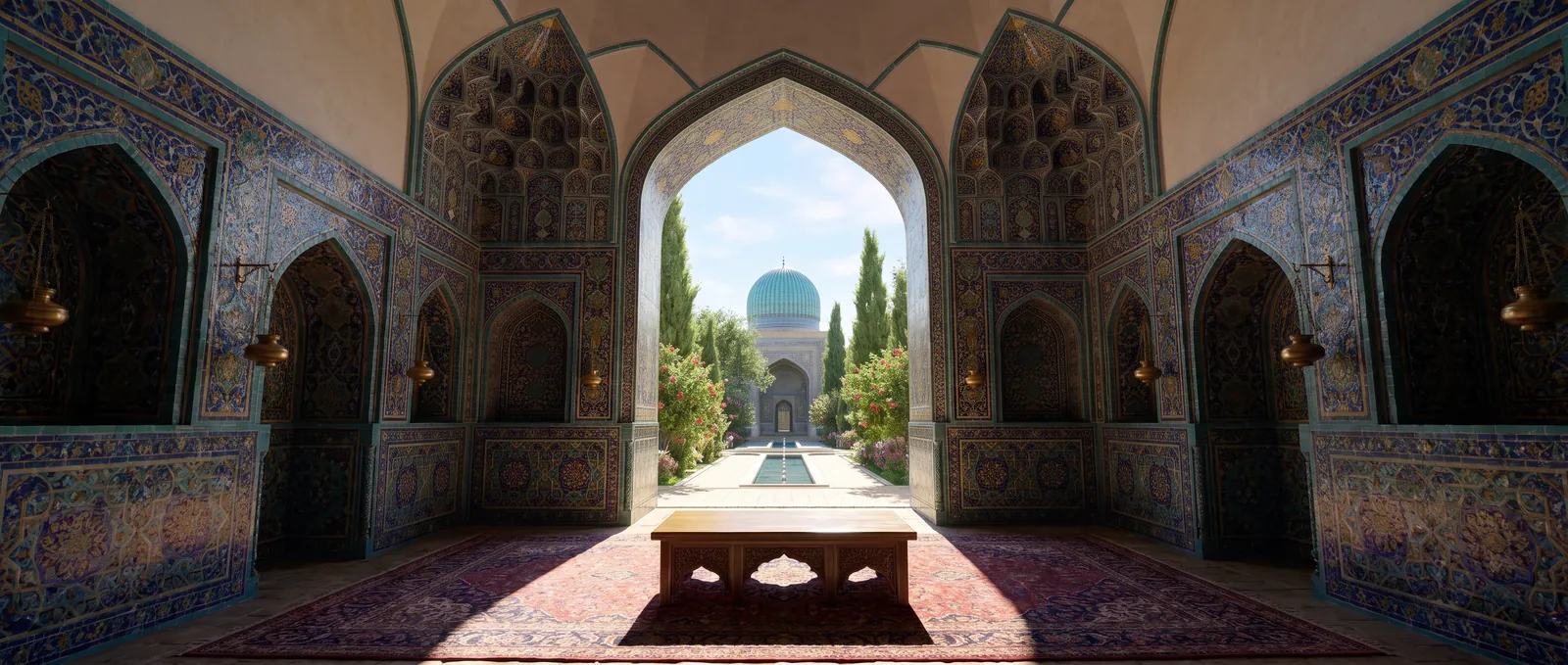
"The small chess is a mere nothing in comparison." An 11×10 board, two citadels, giraffes, camels, war engines and a pawn that can become a king.
Zurafa
- Play the computerSix opponents, from a raw recruit to Timur himself
- Play a friend by linkNo sign-up: send a link and play
- Two players, one screenPass the device and take turns
- Meet the piecesHow the giraffe, the picket and the rest move, in five minutes
- Timur’s battlesEight battles on terrain maps, from Isfahan to Smyrna
- One-move puzzlesOne-move puzzles on the special rules, from the general to the pawn of pawns
The garden of games
Games of Timur’s court and of the steppe around Samarkand. Each has an encyclopedia article: what is known for certain and what remains tradition.
- ShatranjThe small 8 × 8 chess from which both Timur’s great chess and modern chess grew. The ferz and the alfil are weak, so games are slow and positional.
- NardDice and counters. By Persian tradition the sage Bozorgmehr invented nard in reply to the chess sent from India.
- Toguz korgoolA game of pits and stones known across the steppe from the Tian Shan to Kazakhstan: nine pits a side, captures by even counts.
- Asyk atuAsyk atu: a heavy shooter bone, the saka, knocks knucklebones out of a ring. Sheep ankle bones for games turn up in excavations across Central Asia; Kazakh asyk games are on UNESCO’s heritage list.